In the beginning, there was
the horse...
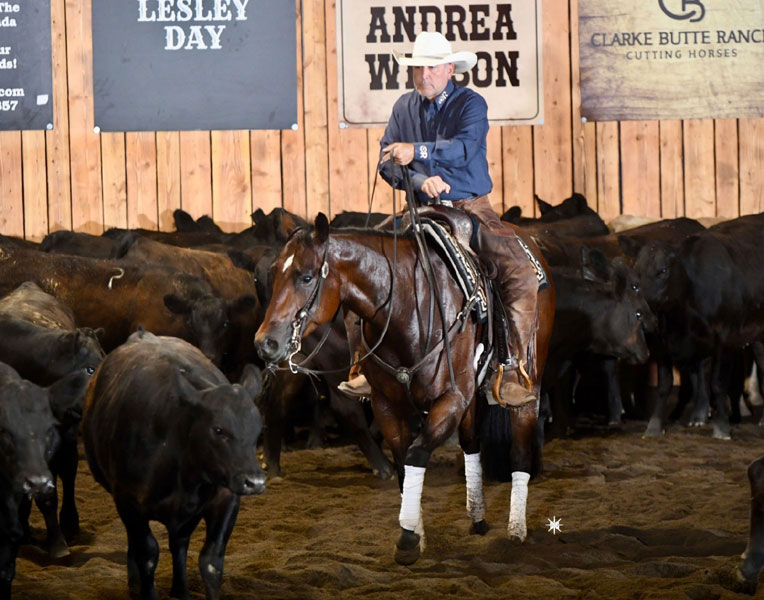
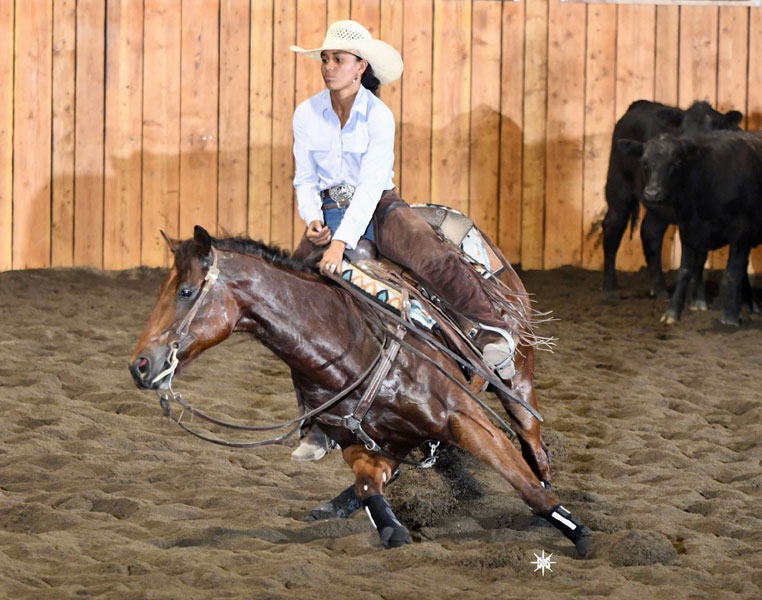
When American cowboys of the 1800s began using their best horses to separate individual cows from a herd, it was part of the daily job. They would never have imagined cutting as one of the world's most popular equine sports. But each year, thousands of cutting events--from Austin to Australia--attract riders aged eight to eighty.
Cutting's heritage runs strong and deep. From the Chisholm Trail to present day, cutting horses have been indispensable tools in the cattle trade. During the era of the open range, cattle from one outfit often drifted and mingled with those of other outfits. Twice a year, in the spring and the fall, neighboring ranchers would join in a roundup to sort out their brands.
Every outfit traveled with a remuda of horses. The cutting horse was an elite member of the remuda. A typical cutting horse might have started out in a cowboy's string, but his sensitivity to cattle brought him to the attention of the roundup boss. He was the horse that pricked his ears toward a cow and followed her with his eyes. He instinctively knew not to crowd her, yet was wary of her every move. He made the difficult job of separating cattle easier and quicker. He even made it fun.
The first advertised cutting contest was held at the 1898 Cowboy Reunion in Haskell, Texas. Fifteen thousand people, lured by ads in the Dallas News and the Kansas City Star, attended. Since the nearest railroad was fifty miles away, they came on horseback, or by wagon and hack. The cutting contest offered a prize of $150, a substantial sum in those days, and 11 riders entered. The first record of cutting as an arena spectator event came at the Southwestern Exposition and Fat Stock Show in Fort Worth, Texas, when a cutting horse exhibition was added to the annual rodeo in 1919. It became a competitive event the following year.
By 1946, there were so many cutting horse contests being held, under so many different sets of conditions and rules, that a group of 13 cutting horse owners met at the Southwestern Exposition and Fat Stock Show and decided to form an association to establish standard rules and procedures for holding such competition. Later, at a meeting in Mineral Wells, Texas, the association was incorporated, and Pat Dalton suggested the name 'National Cutting Horse Association', because it looked as though it had the potential to grow into something big. The first show was held in Dublin, Texas, in the fall of 1946.
By 1963, the association recorded the results of 727 events, of which 504 were recognized as NCHA championship events. In those days, cutters vied for a piece of $404,183 in prize money. That included $23,225 paid out at that year's NCHA Futurity.
Fast-forward to today, and the contestants at the NCHA Triple Crown Events will be divvying up almost $10 million--over a hundred times the offering of that first year. Total purses at NCHA-approved shows now exceed $65 million annually.
Yet for many, cutting's greatest rewards are intangible. The bond between people and horses that makes the sport so special, also links it to the sweat and dust of the Old West, and sets it apart from all other events. "The people who brought cutting from the open range to the arena, and turned the skills of the cowman and cowboy into the contest, were real sports," said Buster Welch, a legendary cutting champion. "That fine sportsmanship is still alive and well in cutting today."
Cutting is a family-based sport well represented by both men and women. The Oregon Cutting Horse Association (OCHA) provides quality cuttings, instructional clinics, youth and starter classes. Additionally, OCHA is sanctioned by the National Cutting Horse Association and benefits from its many programs and support efforts.
Become involved in cutting and help steward our Western Heritage and Lifestyle.